TraqNext vs Toggl 2026: Operations-Grade Accountability vs Anti-Surveillance Time Tracking
Toggl commits to never adding screenshots or surveillance — ever. TraqNext builds proof-of-work, anomaly detection, attendance, and payroll into a single operations platform. Here’s how to decide which fits your team.
14-day free trial · Full features · No credit card required
Competitor information sourced from publicly available official pages, March–April 2026.
Time tracking isn’t one category in 2026. The global time tracking software market is worth $3.8 billion. It will reach $16.1 billion by 2035 (FACT.MR, 2025) — this growth comes from teams with different needs. Some want a tool that employees can pick. Others need clear records. They want work patterns. They want attendance. They want payroll. All these should use the same data source.
Toggl and TraqNext cater to those two different realities. Toggl has an anti-surveillance policy. They will not use screen recording. They won’t track your location or log keystrokes. Webcam monitoring is also off-limits (Toggl, 2026). TraqNext offers an operations stack. It covers time tracking, screenshots, productivity controls, anomaly detection, and HR tools. (TraqNext, 2026)
Toggl is purpose-built for adoption-first, trust-forward time tracking. It promises not to add screenshots or surveillance features. This makes it a top choice. It’s perfect when getting employee buy-in is the main issue. TraqNext ensures accountability for operations. It has screenshots, productivity tracking, anomaly detection, attendance, leave, and payroll. All these features are in one platform. Experts value the time tracking market at $3.8 billion in 2025 (FACT.MR, 2025) — driven by exactly this divide. Choose Toggl for simplicity and trust culture. Choose TraqNext when teams need documented proof of work and unified HR workflows.
TraqNext vs Toggl at a Glance
Before we get into details, let’s see how the tools match up and where they differ. This is important for managers, HR ops, and BPO teams.
| Category | Toggl Track | TraqNext |
|---|---|---|
| Best For | Trust-first teams, freelancers, anti-surveillance culture | Remote ops, BPO, HR/payroll, client services |
| Screenshots | Never — formal policy commitment | ✓ Role-based visibility; admin blur/disable controls |
| Offline Tracking | ✓ Syncs on reconnect | ✓ Syncs on reconnect |
| Idle Detection | ✓ Prompts employee to log activity | ✓ Logs idle; consent-based resume after inactivity |
| Web & App Reports | Timeline is private (user-only) | ✓ Org-wide with admin-managed productivity ratings |
| Fake Activity Detection | Not documented | ✓ Red flag in Timeline report |
| Anomaly Detection | Not documented | ✓ Real-time alerts |
| Payroll Module | Not documented natively | ✓ Native — payout methods, currencies, timesheets |
| Time & Attendance | Timesheet approvals (Premium) | ✓ Full — attendance, leave, scheduling, approvals |
| Leave Management | Available upon request | ✓ Paid/unpaid leave, rules, approval workflow |
| Project Billable Rates | ✓ Starter plan | ✓ Project-level + employee-level rates |
| Predictive Burnout Analysis | Not documented | ✓ Multiple aspects — Context-Switching Fatigue Index, Digital Exhaustion Score, Focus vs. Fatigue Trend, Work-Life Balance Heatmap |
| GDPR | ✓ | ✓ |
| On-Premise Deployment | Not available | ✓ Enterprise option available |
| Anti-Surveillance Policy | ✓ Formal published commitment | Configurable — admin controls: blur, disable, role-based access |
| Free Trial | 30 days (Premium features) | 14 days — full features |
| Starting Price | $9/user/month (Starter) | $0 free (3 users) · paid plans from $48/mo |
Does Toggl or TraqNext Handle Time Tracking and Attendance Better?
On core time tracking, both tools deliver well. They both auto-track during sessions. They support manual timers. They also track offline. Plus, they detect idle time. In 2024, 65% of companies offered work flexibility. That’s a 14% rise from 2023 (IMARC, 2025) — Both tools help meet this need well.

They match in many ways: These include automatic time tracking and idle detection. They also offer offline tracking that syncs when you reconnect. Break logging and manual time entry are also included. Both tools let managers review entries before they’re locked.
Where they differ: Toggl’s idle detection is a personal tool. It reminds employees to log their activities. This data stays private to each person. TraqNext logs idle time in reports for managers. It can stop tracking after a period of inactivity. Tracking starts again when the employee says they are working or on a break (TraqNext, 2026). The consent-based resume is a key privacy tool. Your rollout policy should be very clear. It must leave no room for confusion.
Toggl’s Premium tier has timesheet approvals. You can request time-off management (Toggl, 2026). TraqNext has a time and attendance module. It includes timesheets, attendance, scheduling, and approvals (TraqNext, 2026). For HR teams running attendance to payroll, that’s one system instead of two.
What Is Toggl Actually Built For — And Why That Matters
Seventy-eight percent of companies use employee monitoring tools. (Apploye, 2025) But Toggl is not doing this. They are choosing to go against it on purpose. Its anti-surveillance statement promises not to use screenshots. It won’t include screen recording, location tracking, keystroke logging, or webcam monitoring. This isn’t a missing roadmap; it’s a product philosophy. They share it and defend it in a transparent manner.
The result is a tool designed for adoption-first tracking. Toggl’s Timeline feature tracks the apps and sites you use each day. It performs this action without requiring manual input. Your data is private by default. You decide what gets logged into your time entries. Toggl tracks how you spend your time. This helps you report it with precision. It does not show patterns to management (Toggl, 2026). A Toggl support article confirms that Timeline data is not visible to any other users.
Why does this matter? Fifty-four percent of employees might quit if their employer increases surveillance (Apploye, 2025). Toggl sees the retention risk as real. It focuses on companies that already understand this. If your team has trouble getting people to log hours, Toggl can help. Its approach makes it easier. This helps more people adopt the tool.
What Is TraqNext Actually Built For — And Where Does It Win?
88% of large organizations use workforce management solutions. These tools track productivity. They also make sure payroll is accurate (IMARC, 2025). Teams that need more than a timer create TraqNext. It goes beyond simple timesheet exports. This tool helps operations function with efficiency and dependability.
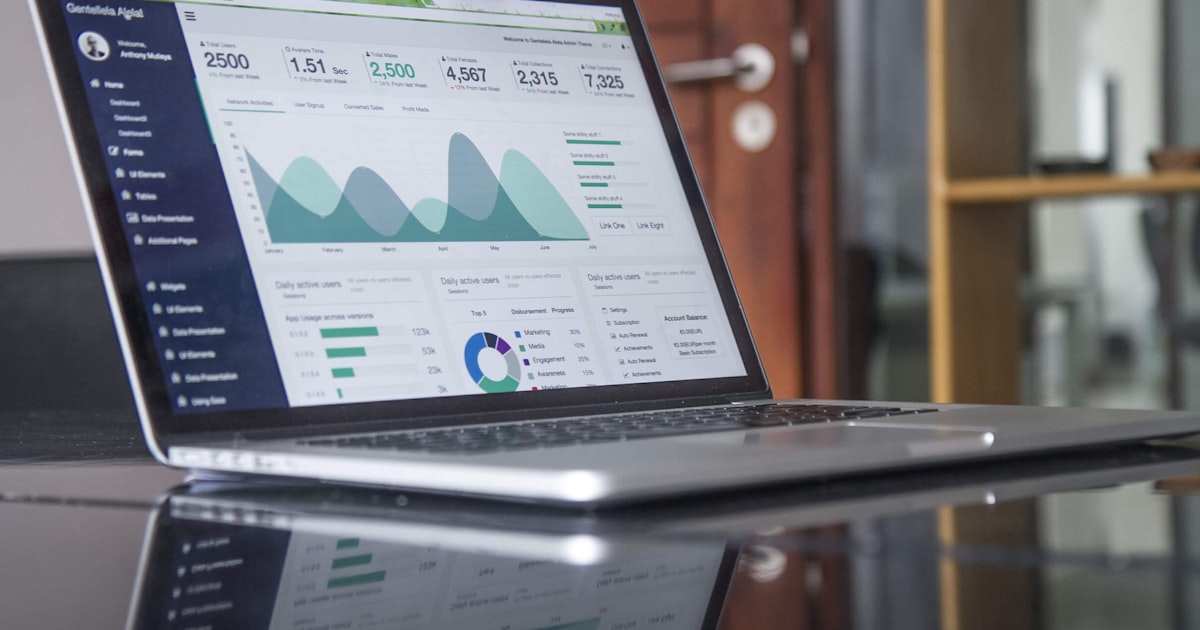
Accountability stack
TraqNext’s accountability features go well beyond what Toggl offers by design:
- Screencast (screenshots): The desktop app captures screenshots. It does this for all connected screens during task tracking. Admins and Owners can view everyone’s screenshots. Managers can view their teams. Employees can view their own. Admins can make blur the default. They can also turn off screenshots for the organization (TraqNext, 2026).
- Web & App Usage Reports: It breaks down apps and websites. This includes productive, unproductive, neutral, and unrated ones. It includes charts and drill-down filters. Visible to authorized roles across the organization (TraqNext, 2026).
- Productivity Rating Management: Admins give productivity ratings to apps and websites. They mark tools as productive, unproductive, or neutral. These ratings change the productivity percentage for the whole organization (TraqNext, 2026).
- Fake Activity Detection: Timeline reports show strange mouse and keyboard patterns. A red indicator marks them. This acts as a real-time alert in the audit trail (TraqNext, 2026).
- Anomaly Detection: It finds unusual work patterns. Then, it sends instant alerts. This tool serves BPO operations and sensitive delivery teams (TraqNext, 2026).
Operations stack
Beyond accountability signals, TraqNext connects those signals to HR operations. Attendance, leave (paid and unpaid), scheduling, and payroll are all integrated modules. They do not use third-party add-ons. Manual time requests must have manager approval. Payroll has several parts; it covers payout methods and currencies. Finally, it reviews timesheets before payouts (TraqNext, 2026).
Insights Beyond Activity
TraqNext also includes Predictive Burnout Analysis. It covers context switching, digital exhaustion, focus vs. fatigue, and work-life balance. These surfaces help managers spot bad work patterns early. This lets them act before resignations happen. They can address issues before they grow.
Explore TraqNext’s Insights and Reporting — including Predictive Burnout Analysis from multiple dimensionsHead-to-Head: The 4 Decisions That Change Your Outcome
The time tracking market is growing. It will reach a 15.5% CAGR by 2035 (FACT.MR, 2025). Teams want more than a simple stopwatch. Here are the four capability gaps that actually change what your team can do.
1. Proof of work vs. trust culture
This is the clearest split. Toggl will not add screenshots or screen-based monitoring. Their anti-surveillance statement is clear (Toggl, 2026). TraqNext captures screenshots. Admins can blur the images. They can also turn off screenshot capture for the entire organization (TraqNext, 2026). Neither is wrong. The right choice depends on your clients, auditors, or operations team. Do they need proof of real work?
2. Payroll and HR workflows
Toggl has timesheet approvals for the Premium tier. Its billing workflows are simple and neat (Toggl, 2026). But native payroll processing is not a documented Toggl module. TraqNext focuses on payroll and attendance as key features. They use the same platform for time tracking. This means data flows without interruption. Each pay period does not need reconciliation. For HR and payroll teams, that difference compounds.
3. Billables and project profitability
Both tools support billable rates. Toggl offers them in its Starter plan. People recognize it for its smooth billing processes. TraqNext has billing rates for projects and employees. It tracks totals and costs for each project. It also makes client billing exports (TraqNext, 2026). This helps profitability calculations show the full cost. It includes more than logged hours.
4. Governance at scale: BPO and outsourced delivery
For BPO operations, the choice is clear. Toggl prioritizes anti-surveillance. This makes it a bad choice for cases where client SLAs need proof. They want to see that billed hours match actual work. TraqNext provides screenshot capture, fake activity detection, and anomaly alerts. It also offers web and app usage reports. These tools help with your governance needs. Admin privacy controls let you choose what users can see and who can see it.
Pricing: What You Actually Pay in 2026
Pricing structures differ, and the gap widens with larger team sizes. Toggl uses a per-user monthly price. Free for up to 5 users. Starter is $9 per user. Premium is $18. Enterprise has custom pricing (Toggl, 2026). A 50-person team on Starter alone costs $450/month before any premium features.
TraqNext has flat pricing plans. Starter is free for 3 users. Standard is $48. Premium is $96. Enterprise is $144 (TraqNext, 2026). Check billing cadence and user limits before buying. The pricing page displays both annual and monthly options. For growing teams, a flat-tier structure sets a clear cost limit. Toggl’s per-user model lacks this predictability.
Trial notes: Toggl offers a 30-day Premium trial. TraqNext provides a 14-day trial with full access and no credit card needed. It also offers a free Starter plan for up to 3 users. This is great for testing before choosing a paid tier.
Which Teams Should Choose Toggl — and Which Should Choose TraqNext?

The decision comes down to what your team needs time tracking to do for the business — not just which checklist is longer.
- Employees self-report and adoption is the primary bottleneck
- Your team culture values trust over accountability signals
- You need clean billable rate tracking without governance overhead
- You want a formal anti-surveillance policy to share with your team
- Your setup is 5–50 users with straightforward billing needs
- You manage remote, distributed, or outsourced delivery teams
- You need proof-of-work: screenshots, app usage, fake-activity detection
- HR, payroll, and attendance need to run from a single platform
- You’re in BPO operations where client SLAs require auditability
- You want accountability with configurable privacy controls built in
| Team Type | Better Fit | Primary Reason |
|---|---|---|
| Freelancer / small agency (1–10) | Toggl | Lightweight billing, minimal setup, no governance overhead needed |
| Remote knowledge workers (trust-first culture) | Toggl | Anti-surveillance posture reduces adoption friction; Timeline stays private |
| Managers with distributed or hybrid teams | TraqNext | Timeline + web/app reports + anomaly alerts give coaching-level signals |
| HR / payroll / ops teams | TraqNext | Attendance + leave + payroll run from the same data — no reconciliation step |
| BPO / outsourced delivery operations | TraqNext | Screenshots, fake-activity detection, and anomaly alerts for SLA-level auditability |
| Client services with proof-of-work requirements | TraqNext | Screencast + billable rates + project margin monitoring in one platform |
| Business owners tracking utilization and margins | TraqNext | Billable rates, project totals, productivity categories, and payroll in one view |
| Enterprise IT teams (200+ employees, on-premise) | TraqNext | On-premise deployment and white-labeling available; GDPR compliant; dedicated implementation support |
🔒 TraqNext rollout tip: Before scaling, write a simple monitoring policy. Keep it to one page: what data we collect, who can access it, and how employees can request corrections. Enable blur-by-default and role-limited screenshot access from day one. Frame productivity categories and idle signals as workflow tools—not performance scores. This reduces pushback and improves adoption alongside accountability.
Keep your teams efficient while ensuring privacy and compliance, with help just a click away.
Explore today – full access, no credit card required!
Frequently Asked Questions
Does Toggl take screenshots of employees?
No. Toggl’s support documents state that it does not support screenshots. Its Timeline data is not visible to other users (Toggl, 2026). Toggl’s anti-surveillance statement promises not to use screen recording. It will not include webcam monitoring or keystroke tracking either. TraqNext’s Screencast feature gives proof-of-work screenshots. It has role-based visibility. Admins can blur or disable captures.
Can TraqNext track time offline?
Yes. TraqNext’s desktop app tracks time without an internet connection. When the connection returns, reports synchronize all data (TraqNext, 2026). Both TraqNext and Toggl support offline tracking — this is feature parity. The main difference is how idle time shows up in manager reports. It can be visible to them or stay private for the individual.
Which tool is better for payroll and attendance management?
TraqNext has a clear advantage. Payroll is a key feature. It offers payout methods and currencies. You can set hourly rates. Timesheet reviews are also on the platform (TraqNext, 2026). Toggl’s Premium plan has timesheet approvals. It does not have a built-in payroll processing module. For HR teams with unified attendance-to-payroll workflows, TraqNext cuts out a reconciliation step. This happens every pay cycle.
Does TraqNext record keystrokes or passwords?
No. TraqNext’s privacy policy says it does not log any typed info. (TraqNext Privacy Policy, 2026). It collects screenshots, app names, and visited websites. It tracks work time, OS details, and mouse/keyboard activity. But it does not capture keystroke content. The system encrypts screenshot data while sending it with SSL/HTTPS. It also keeps the data stored in an encrypted format. Admins can enable blur or disable screenshot capture for the whole organization.
Is TraqNext better than Toggl for remote teams?
It depends on what your remote team needs. Toggl works best with trusting employees. Its anti-surveillance promise cuts down friction. Managers can share this in a straightforward manner. TraqNext is great for remote teams. It gives proof of work. It spots anomalies. It tracks attendance. It handles payroll. All these features are on one platform. Teams that outsource delivery often need TraqNext’s accountability stack. Those with client SLAs or compliance rules also need it.
Can I switch from Toggl to TraqNext?
Yes. TraqNext has a 14-day free trial. You can use all features for free. You need no credit card (TraqNext, 2026). Setup takes only a few minutes. First, install the desktop app. Next, invite your team by email. The data syncs right away. TraqNext provides support to enterprise teams. They help with a structured rollout.